Gujarat & Northern India
Tulsi Vivah
Households and temples perform a full traditional wedding ceremony between the Tulsi shrub and the Shaligram stone or Krishna murti, accompanied by wedding folk songs.
पर्व गाइड
The awakening of the cosmic preserver, ending monsoon slumber and ushering in auspicious ceremonies.
Prabodhini Ekadashi · Dev Uthani Gyaras · Tulsi Vivah Eve
Devutthana Ekadashi marks the end of the four-month monastic period of Chaturmasya, during which Lord Vishnu awakens from his cosmic yoga-nidra atop the serpent Shesha. This sacred day initiates the auspicious Hindu wedding season and sets the stage for the ceremonial Tulsi Vivah.
देवता: Lord Vishnu (Damodara), Goddess Tulsi (Vrinda)
Having entered a deep contemplative cosmic sleep on Devshayani Ekadashi in Ashadha, Lord Vishnu awakens on this tithi after four months of planetary quietude. In Puranic lore, he immediately responds to the devotion of Vrinda by uniting ceremonially with the sacred Tulsi plant in his Shaligram manifestation.
The awakening of inner discernment and vigilance after periods of inward contemplation, restoring righteous action in the world.
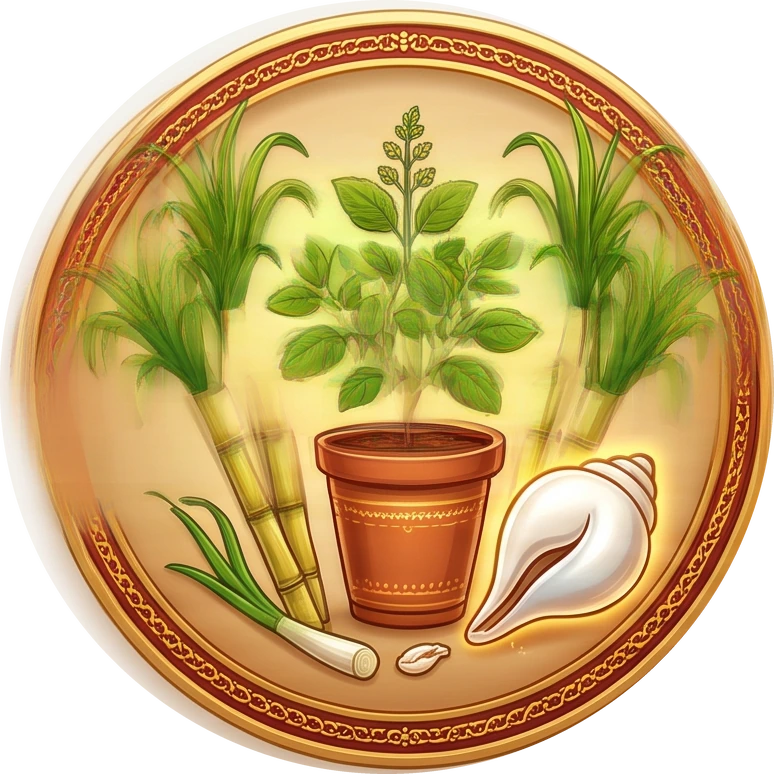
Devotees observe a strict Ekadashi fast. In the courtyard, the Tulsi pot is draped in bridal red silk and adorned with turmeric; conch shells and brass bells are sounded rhythmically to signify waking Lord Vishnu with hymns and chanting of the Vishnu Sahasranama.
Tulsi Vivah
Households and temples perform a full traditional wedding ceremony between the Tulsi shrub and the Shaligram stone or Krishna murti, accompanied by wedding folk songs.
Kartiki Ekadashi Pandharpur Yatra
Hundreds of thousands of Warkari pilgrims complete their pilgrimage on foot to the Vitthal Temple in Pandharpur, singing abhangas and playing cymbals along the river Chandrabhaga.
During the four months of Chaturmasya, cosmic energies are inward-drawn while Lord Vishnu rests; with his awakening on Devutthana Ekadashi, the flow of expansive blessings resumes for auspicious milestones.
Devutthana Ekadashi coincides with the early winter sugarcane harvest; erecting sugarcane pavilions around the Tulsi plant dedicates the first fruits of the harvest to the divine.