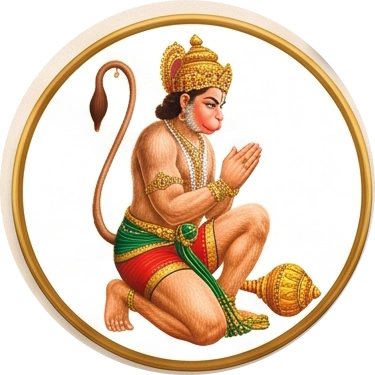
Lord Hanuman

Lord Hanuman

Ashta Siddhi & Nava Nidhi: Hanuman’s Eight Yogic Perfections and Nine Divine Treasures

How Nishkāma bhakti holds mastery over the elements and the authority to bless seekers with sacred abundance

Introduction

In the Hanuman Chalisa, Tulsidas proclaims Hanuman ‘Ashta siddhi nava nidhi ke data’—the bestower of the eight siddhis and nine nidhis. This is not a claim of casual magic. Siddhis are yogic perfections: mastery of body, space, and will; nidhis are cosmic treasuries of material and spiritual prosperity. Hanuman holds both because his power is never for the self.

Classical yoga (Yoga Sūtras) warns that siddhis can distract the seeker. The Ramayana shows the opposite path: Hanuman uses Aṇimā, Mahimā, Garimā, and Laghimā only in service of Rama—entering Lanka unseen, crossing the ocean, weighing down Bhīma’s pride, and flying with Sanjīvanī. Desireless action (nishkāma karma) turns power into blessing.

This guide presents the eight Ashta Siddhis as elemental mastery of form and force, then the nine Nava Nidhis as sacred forms of abundance—from metals and gems to land, arts, valor, and lasting renown. Together they map strength without ego and wealth without greed.

Ashta Siddhi wheel

Eight yogic perfections

Each petal is one siddhi. Choose it to read the Ramayana episode and inner meaning below.

Atomic minuteness — reduce the body to an atom

Nava Nidhi treasury

Nine divine treasures

Each treasury tile is one nidhi. Open it to explore abundance as an instrument of service.

Lotus treasure — gold, silver, metals; purity and generosity

Mantras

Attributes

Aṇimā is the power to become as small as an aṇu (atom or microscopic particle). In practice it means dissolving visibility, ego, and resistance so one can pass where force cannot. Hanuman used Aṇimā to slip past Lanka’s guarded gates and move unseen among Rāvaṇa’s forces—strength expressed as stealth in service of dharma.

Inner Aṇimā: become small in ego—listen, observe, and serve without needing to be seen.

Valmiki Ramayana, Sundara Kanda; Hanuman Chalisa 31

Entering Laṅkā unnoticed after surveying the ocean fortress—size becomes strategy, not spectacle.

Mahimā expands form to immense scale. Hanuman grew to confront Surasā at the ocean mouth and to bridge fear with presence when crossing toward Laṅkā. Expansion here is courage made visible: meeting the scale of the task with an equal response.

Inner Mahimā: enlarge capacity—compassion, courage, and responsibility—when the moment demands more of you.

Valmiki Ramayana, Sundara Kanda (Surasā episode)

Growing vast to match Surasā’s challenge, then returning to purpose—power that flexes, then focuses.

Garimā makes the body infinitely heavy. In the Mahābhārata tradition, Bhīma cannot lift Hanuman’s resting tail—pride meets immovable humility. Weight here is moral gravity: the rootedness of one who will not be moved from dharma.

Inner Garimā: be unshakeable in vow, speech, and loyalty when pressured to compromise.

Mahābhārata tradition (Bhīma–Hanuman meeting on the way to gather Saugandhika)

Bhīma’s strength fails against a deliberately heavy tail—teaching that force without humility is incomplete.

Laghimā lightens the body to air-like freedom—flight, swift travel, effortless ascent. Hanuman’s leaps across ocean and sky embody Laghimā joined with devotion: the mind that drops heaviness of doubt becomes able to move.

Inner Laghimā: release unnecessary burdens—resentment, delay, self-importance—so action becomes light and true.

Valmiki Ramayana, Sundara Kanda; Kishkindhā Kanda

The ocean leap toward Laṅkā—gravity of fear released into purposeful flight.

Prāpti is the ability to access any place in creation without physical constraint—finding what must be found. Hanuman locates Sītā in Aśoka Vana against impossible odds: attainment guided by clarity of mission, not random seeking.

Inner Prāpti: arrive at what matters—truth, help, reconciliation—without being blocked by excuses.

Valmiki Ramayana, Sundara Kanda

Finding Sītā amid Laṅkā’s labyrinth—right destination through right intention.

Prākāmya is will so aligned that rightful aims unfold. Hanuman’s sankalpa never serves private craving; it serves Rama’s work—so obstacles yield. In seekers, this is not ‘get whatever you want,’ but ‘want only what dharma asks,’ then act until it is done.

Inner Prākāmya: one clear vow, repeated until outer circumstances rearrange around it.

Hanuman Chalisa; Valmiki Ramayana (mission resolve)

Burning Laṅkā’s pride after the mission’s message is delivered—will that completes, not consumes.

Īśitva is sovereign understanding of nature’s laws—not tyranny over creation, but skillful participation in it. Hanuman commands wind-born speed (as Vāyu’s son), mountain-lifting resourcefulness, and fire that burns only what must be corrected. Lordship here is stewardship under Rama.

Inner Īśitva: govern your senses and schedule so outer life becomes orderly under a higher aim.

Valmiki Ramayana, Sundara & Yuddha Kāṇḍas

Carrying the Sanjīvanī mountain—nature’s healing placed in service of life.

Vaśitva tames and harmonizes—speech that turns hearts, presence that calms fear, command that orders chaos without hatred. Hanuman’s diplomacy with Vibhīṣaṇa’s household, his reassurance of Sītā, and his leadership of the vānara forces show influence rooted in truth and affection, not domination.

Inner Vaśitva: lead by example and kind firmness so others willingly align with the good.

Valmiki Ramayana, Sundara & Yuddha Kāṇḍas

Convincing allies and steadying the grieving—power that gathers, not scatters.

Padma nidhi is abundance in precious metals and the virtues that make wealth clean—purity of means and generosity of sharing. Associated with lotus symbolism, it suggests prosperity that rises above mud without clinging to it.

Earn cleanly; give freely—wealth as offering, not identity.

Purāṇic nidhi lists; Hanuman Chalisa 31

Mahāpadma is extraordinary, lasting wealth—material and spiritual—that endures across generations. It points to fortunes built on dharma so descendants inherit not only assets but character.

Build what outlives you: values, learning, and shared wellbeing.

Purāṇic nidhi lists; Hanuman Chalisa 31

Śaṅkha nidhi governs rare gems and pearls, and by extension the purity of sound—mantra, truth-speech, and auspicious declaration. The conch announces dharma; this treasure is wealth that also clarifies voice.

Guard speech as carefully as jewels—truth is a treasury.

Purāṇic nidhi lists; ritual symbolism of śaṅkha

Makara nidhi is wealth of arms, courage, strategic mastery, and favor in rightful power. It suits protectors and leaders who wield strength for defense of the vulnerable, as Hanuman does for Rama’s cause.

Courage and strategy in service of protection, never aggression for ego.

Purāṇic nidhi lists; Hanuman as warrior-messenger

Kacchapa nidhi is steady, conserved wealth—security that endures like the tortoise’s shell. It favors patient saving, risk wisdom, and protection of what supports family and community over time.

Conserve energy and resources; longevity beats flash.

Purāṇic nidhi lists

Mukunda nidhi is mastery of fine arts—music, literature, aesthetics. Cultural richness is true wealth: beauty that uplifts society. Hanuman himself is a master of speech and learning; this nidhi blesses creative excellence offered in devotion.

Cultivate craft and culture as sādhanā, not vanity.

Purāṇic nidhi lists; Hanuman as scholar-diplomat

Kunda nidhi roots prosperity in land, harvest, property, and honest trade—the earthy foundation of household and society. It honors work that feeds many and exchanges fair value.

Respect soil, labor, and fair exchange as sacred.

Purāṇic nidhi lists

Nīla nidhi is wealth from precious blue stones and from enterprising trade ventures—courage to cross markets as Hanuman crossed oceans, with ethics intact.

Venture boldly; keep integrity as your rarest gem.

Purāṇic nidhi lists

Kharva nidhi is a broad, enduring reserve—material prosperity plus social renown earned through reliability. Fame here is trust accumulated, not noise.

Let reputation rest on service remembered, not self-advertised.

Purāṇic nidhi lists; Hanuman’s lasting glory in bhakti culture

Conclusion

Because Hanuman acts purely without personal desire (nishkāma), he holds divine authority to bestow these treasures upon sincere seekers. Ask not first for powers or riches—ask for a heart like his. Siddhis then protect the path, and nidhis arrive as instruments of seva, not chains of greed.

Practice: chant Hanuman Chalisa with attention to verse 31; offer one act of anonymous service weekly; treat every skill and surplus as belonging to Rama’s work.

← Lord Hanuman guide All deities