Day 2
Navratri Day 2: Deep Dive into Maa Brahmacharini, Origin, Rituals, and the Power of Discipline
Welcome back to OmMangalam! As we move from the foundational stability of Day 1, today we step into the sacred realm of Day 2, dedicated to Maa Brahmacharini—the embodiment of asceticism, severe penance, unshakeable willpower, and the discipline required to master one's life.
Overview
Following the fresh beginnings and grounding energy of Day 1 (Maa Shailputri), Day 2 represents the stage of education, focused learning, and spiritual discipline. In ancient times, the first 25 years of human life were designated as the 'Brahmacharya Ashram'—a period spent in a Gurukul dedicated entirely to learning, character building, and mastering skills. Similarly, in the unfolding story of the Divine Mother, after taking birth as the mountain king's daughter, she enters the phase of rigorous penance and inner transformation to attain spiritual union with Lord Shiva. This day reminds us that no meaningful growth, career success, or spiritual realization can happen without supreme self-discipline.
Maa Brahmacharini
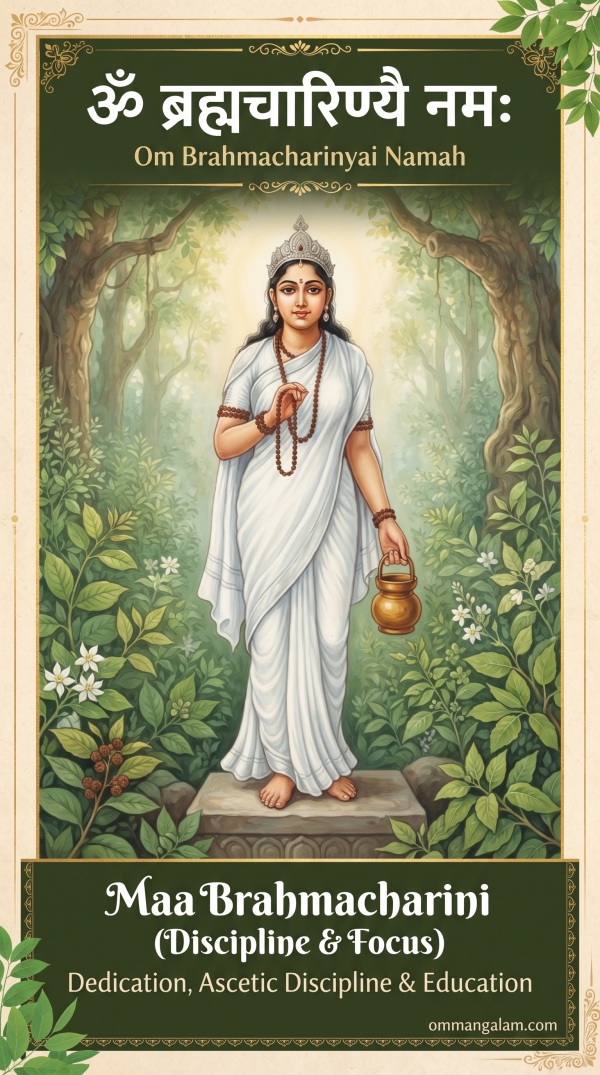
Derived from 'Brahman' (absolute consciousness) and 'Chari' (one who moves), Brahmacharini is the unmarried, ascetic form of the Goddess who performed thousands of years of severe austerities, surviving initially on fruits and flowers, and later on dry leaves and fasting, to attain Lord Shiva.
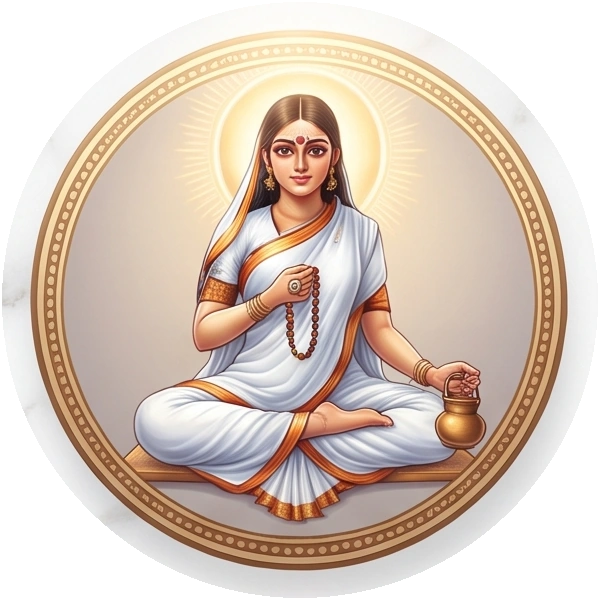
Maa Brahmacharini symbolizes studenthood, hard work, emotional resilience, and the burning desire for higher knowledge. She wears simple white garments, signifying total detachment from superficial materialism and absolute purity of purpose. In her hands, she carries a Kamandal (water pot, symbolizing sacred storage of spiritual energy) and a Japamala (rosary, symbolizing continuous meditative focus).
Color: Green, representing steady growth, renewal, harmony, and psychological balance.
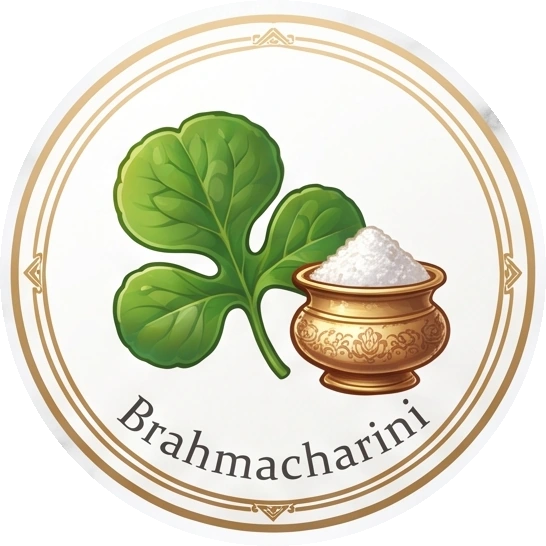
Her primary medicinal herb is 'Brahmi', a premier Ayurvedic brain-boosting herb known for dramatically improving cognitive retention, reducing stress, clearing mental fog, and supporting nervous system health.
For someone new to Navratri, the offerings on Day 2 reflect simplicity, sweetness, and devotion. Traditional offerings include sugar, sugar crystals (misri), or milk-based sweets. A unique traditional ritual involves placing a red sandalwood mala inside a vessel filled with sacred sugar during the 9 days to supercharge it with chanting energy.
Mantras
Om Dum Durgaye Namaha
O Divine Mother, protector of the universe and dispeller of ignorance, grant me the focus, purity, and discipline to overcome my inner weaknesses.
Japa guidance
A red sandalwood (Rakta Chandan) rosary placed in a vessel of pure sugar during the practice.
Chant 11 rosary rounds (11 malas of 108 beads each, totaling 1,188 chants daily if following the intensive traditional discipline, or at least 1 full mala of 108 times for general practitioners).
Pooja steps
- Morning Purification: Wake up early during the Brahma Muhurta hour, take a cleansing bath, wear green or clean white clothes to honor the ascetic energy of the day.
- Altar Setup: Light your continuous ghee lamp from Day 1 and offer fresh green leaves or white/green flowers to Maa Brahmacharini.
- The Sugar and Mala Ritual: Take a clean silver or copper bowl filled with pure sugar. Place your red sandalwood rosary inside it before starting your prayers.
- Focused Meditation: Close your eyes and visualize a calming green aura of light filling your mind, clearing away distractions, procrastination, and mental clutter.
- Mantra Japa: Hold your mala and chant your designated rounds of 'Om Dum Durgaye Namaha' with absolute inner silence and concentration.
- Prasad Consumption: Conclude by offering sugar or sweets, and if practicing the sugar-mala ritual, take a tiny pinch of the charged sugar daily after your prayers over the coming months.
Modern-life alignment
In the digital age, our attention spans are constantly fractured by notifications, instant gratification, and multitasking. Day 2 offers a powerful psychological reset: it reminds us of the value of deep work, patience, and rigorous self-discipline. By practicing a minimalist routine, cutting out mental distractions, consuming Brahmi-infused herbal teas for cognitive health, and committing to daily focus, we rebuild our inner willpower and emotional endurance.
FAQ
The word 'Brahma' refers to universal consciousness or sacred knowledge, and 'Charini' means the one who moves or walks along that path. Therefore, Brahmacharini is the one who walks in divine consciousness. For anyone navigating modern life—whether a student, a professional, or an individual trying to break bad habits—worshipping Maa Brahmacharini teaches the art of single-minded focus, mental restraint, and lifelong learning.
Green symbolizes nature, growth, freshness, and the steady sprouting of knowledge. In Ayurveda, Brahmi (Bacopa monnieri) is celebrated as the ultimate brain tonic that enhances memory, clears blood toxins, and promotes vocal clarity—serving as a direct physical parallel to the mental sharpness and wisdom that Maa Brahmacharini bestows upon her devotees.
Related
May the supreme discipline, focus, and grace of Maa Brahmacharini clear all distractions from your path and guide you toward mastery. Join us tomorrow with OmMangalam as we explore the grace and emotional maturity of Day 3!