Maharashtra
Ganeshotsav
Massive public pandals (such as Lalbaugcha Raja) host millions of visitors, accompanied by traditional Dhol Tasha drum troupes and grand city processions.
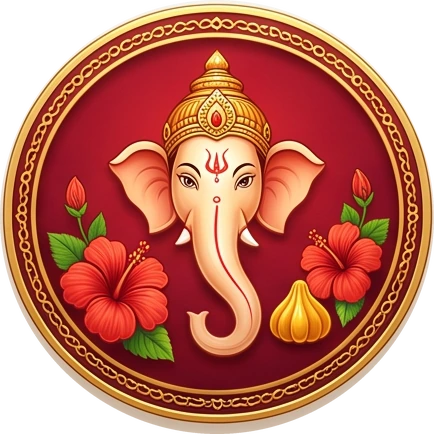
Festival guide
Welcoming the remover of obstacles, lord of wisdom, and harbinger of auspicious beginnings.
Vinayaka Chavithi · Ganeshotsav · Vinayagar Chaturthi
Ganesh Chaturthi celebrates the arrival of Lord Ganesha to the earthly realm from Mount Kailash. Families and communities install beautifully handcrafted clay murtis of Ganesha in their homes and public pandals, offering prayers, sweet modaks, and joyous music for ten days before returning him to the water during Visarjan.
Deities: Lord Ganesha (Vighnaharta / Ganapati), Goddess Gauri (Parvati)
According to the Shiva Purana, Goddess Parvati fashioned child Ganesha from sandalwood paste and turmeric to guard her inner sanctum. When Shiva arrived and was barred entry, a confrontation ensued resulting in Ganesha losing his head; seeing Parvati's grief, Lord Shiva revived the child by placing the head of an elephant upon his shoulders, blessing him as the leader of all divine attendants (Ganas) and the first to be worshipped before all endeavors.
Humility, the removal of psychological and spiritual obstacles, mental adaptability, and the impermanence of material forms returned to elements.
Performing the Pran Pratishtha ritual to invoke divine breath into the idol, followed by daily Shodashopachara worship, chanting of the Ganapati Atharvashirsha, and waving fragrant dhoop and camphor lamps.
Ganeshotsav
Massive public pandals (such as Lalbaugcha Raja) host millions of visitors, accompanied by traditional Dhol Tasha drum troupes and grand city processions.
Vinayaka Chaturthi / Gauri Habba
Goddess Gauri (Parvati) is welcomed a day earlier on Tritiya; families prepare kozhukattai dumplings and offer special clay umbrella ornaments to Ganesha.
Puranic accounts mention Ganesha swallowing the fire-demon Analasura, causing intense burning heat; sages cooled his stomach by placing 21 blades of soothing Durva grass on his head.
Visarjan reminds us of cosmic cycles: form arises from the earth, is revered with love, and dissolves back into water, teaching detachment and the formless nature of the ultimate reality.