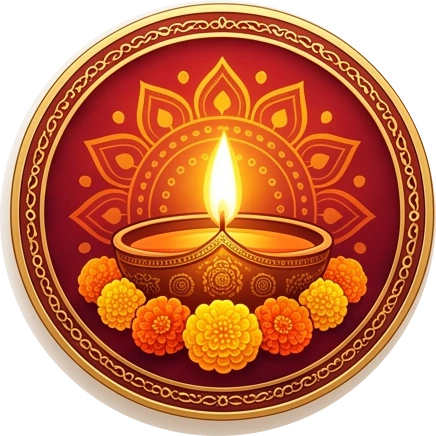
The supreme festival of lights, welcoming divine abundance and dispelling inner darkness.
Festival of Lights · Deepotsava · Lakshmi Puja
Significance
Diwali is the crowning jewel of Hindu festivals, celebrated on the darkest new moon night (Amavasya) of Kartika. Rows of clay oil lamps illuminate every rooftop, threshold, and courtyard to celebrate Lord Rama's triumphant return to Ayodhya and to welcome Goddess Lakshmi and Lord Ganesha into homes.
Timing
MonthKartika
TithiAmavasya
SeasonOctober - November
History & origins
Deities: Goddess Mahalakshmi, Lord Ganesha, Lord Rama, Lord Krishna
Deepavali commemorates the joyful homecoming of Lord Rama, Sita, and Lakshmana to Ayodhya after fourteen years of exile and the defeat of Ravana, celebrated by citizens who lit rows (avali) of earthen oil lamps (deepa) across the kingdom. In Southern India, it also honors Lord Krishna and Satyabhama vanquishing the tyrannical demon Narakasura.
The victory of light over darkness, wisdom over ignorance, and inner purity over materialistic despair.
Rituals & traditions
Illuminating every corner of the house with dozens of handmade clay diyas filled with mustard or sesame oil
Crafting vibrant floor rangolis using mineral colors, rice powder, and fresh flower petals
Donning brand-new festive clothing and setting out silver coins for Lakshmi-Ganesha Puja
Performing the elaborate Lakshmi-Ganesha Puja during the auspicious Pradosh and Nishita Kaal muhurats. Conch shells are blown, bells are rung, and devotees chant the Sri Suktam, followed by sharing sweets and bursting festive firecrackers.
Traditional foods
Kaju Katli and Motichoor Laddoo
Chakli, Murukku, and spicy Sev
Mawa Gujiya and Mysore Pak
Kheel and Batashe (puffed rice and crystallized sugar drops)
Regional variations
Tamil Nadu & Karnataka
Deepavali (Naraka Chaturdashi focus)
Celebrations peak at dawn on Chaturdashi with the Ganga Snanam (anointing warm sesame oil infused with peppercorns on the head, followed by a warm bath) and consuming medicinal Deepavali Lehyam.
West Bengal & Odisha
Kali Puja
Devotees perform midnight worship of Goddess Kali with hibiscus garlands, offerings of lentils and sweets, and night-long meditation in decorated pandals.
FAQ
Why are Goddess Lakshmi and Lord Ganesha worshiped together on Diwali?
Wealth without wisdom leads to arrogance and ruin; worshipping Lakshmi (goddess of wealth) alongside Ganesha (lord of intellect and discernment) ensures that prosperity is governed by righteousness and humility.
What is the spiritual meaning behind lighting clay diyas?
The clay body represents the physical human form, the oil represents the mind and vasanas (latent tendencies), and the cotton wick represents the soul; igniting it with the flame of knowledge dispels spiritual darkness.